How much does an RV solar system cost? A complete RV solar panel system typically ranges from $500 to $5,000+ depending on your power needs and component quality. Budget systems start around $500-$1,000 for basic setups, mid-range systems cost $1,000-$3,000 for moderate power needs, while premium installations exceed $3,000 for full-time RVers requiring comprehensive off-grid capability.
If you’re an RV owner dreaming of off-grid freedom, you’ve probably wondered about the investment required to harness the sun’s power. Solar panels promise independence from crowded RV parks and noisy generators, but understanding the true cost can feel overwhelming. This comprehensive breakdown will help you navigate the world of RV solar panel costs and make an informed decision for your mobile lifestyle.
Also Read:- RV Solar Panels in Montana Winter: Performance & Maintenance Tips 2026 (2026)
Understanding RV Solar Panel System Components
Before diving into specific costs, it’s essential to understand what makes up a complete RV solar system. Unlike simply buying panels and calling it done, a functional solar setup requires several interconnected components working together seamlessly.
The main components include solar panels that capture sunlight, batteries that store the generated energy, a charge controller that regulates power flow to prevent battery damage, an inverter that converts DC power to AC power for your appliances, and all the mounting hardware and wiring that connects everything together. Each component contributes significantly to your overall RV solar panel cost.
Average Cost of Solar Panels
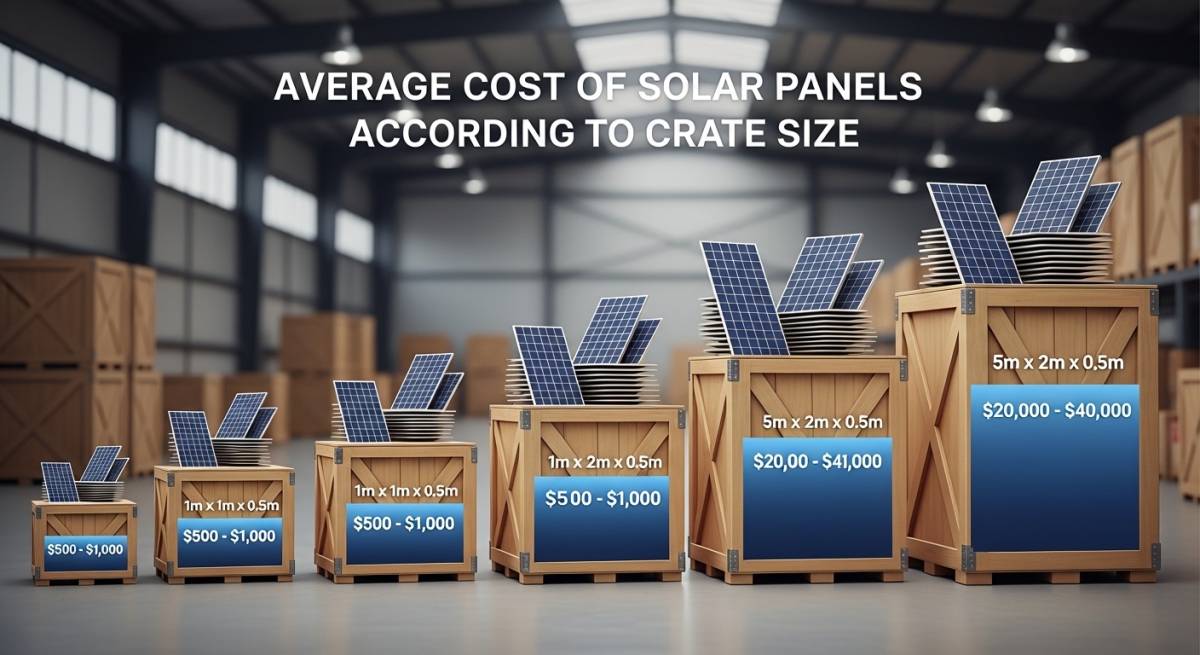
Solar panels themselves represent a significant portion of your initial investment. In 2025, RV solar panels typically cost between $0.70 and $1.50 per watt, though this varies based on panel type, efficiency rating, and brand reputation.
For a typical RV setup, you’ll likely need between 200 and 800 watts of solar capacity. A basic 200-watt panel setup runs approximately $140-$300, while a more robust 400-watt system costs $280-$600, and premium 800-watt installations can reach $560-$1,200 for the panels alone.
Monocrystalline panels dominate the RV market due to their superior efficiency and space-saving benefits. While they cost slightly more than polycrystalline alternatives, the efficiency gains justify the price difference for most RV owners. Flexible panels, popular for curved RV roofs, command premium prices of $200-$400 per 100 watts but offer unique installation advantages.
Brand names like Renogy, Rich Solar, and Newpowa offer excellent value in the mid-range market, while premium brands like SunPower and LG provide top-tier efficiency at higher price points. Don’t overlook lesser-known manufacturers, as many produce quality panels at competitive prices.
Battery System Costs
Your battery bank is arguably the most critical component of your RV solar system, and it’s often the most expensive. Batteries store the energy your panels generate, providing power during nighttime hours and cloudy days.
Traditional flooded lead-acid batteries are the budget option, costing $100-$200 per 100Ah of capacity. For a modest 200Ah battery bank, you’re looking at $200-$400. However, these batteries require regular maintenance, proper ventilation, and have shorter lifespans.
AGM (Absorbed Glass Mat) batteries offer maintenance-free operation and better performance, costing $200-$400 per 100Ah. A 200Ah AGM bank runs $400-$800, representing solid middle-ground value for many RVers.
Lithium batteries, specifically LiFePO4 (Lithium Iron Phosphate), have revolutionized RV solar systems. While expensive upfront at $400-$800 per 100Ah, they offer superior performance, 3,000-5,000+ charge cycles compared to 300-500 for lead-acid, 50% weight savings, and 100% usable capacity versus 50% for lead-acid. A 200Ah lithium system costs $800-$1,600 but often proves more economical over its lifetime.
Battery needs vary dramatically based on your power consumption. Weekend warriors might manage with 200Ah, while full-time boondockers often install 400-600Ah systems costing $1,600-$4,800 for lithium options.
Also Read:- Billings RV Solar Installation: Top 5 Local Shops + Complete DIY Guide (2026)
Charge Controller Investment
The charge controller sits between your solar panels and batteries, regulating voltage and current to protect your battery bank. This crucial component prevents overcharging and optimizes charging efficiency.
PWM (Pulse Width Modulation) controllers are the budget choice at $20-$100 for systems under 300 watts. They’re simple, reliable, and adequate for small systems, though they waste some potential solar energy.
MPPT (Maximum Power Point Tracking) controllers cost $150-$500 but deliver 20-30% more efficiency, especially valuable in cold weather or suboptimal conditions. For any system over 300 watts, MPPT controllers quickly pay for themselves through improved performance.
Popular brands like Victron Energy ($200-$400), Renogy ($100-$300), and EPEver ($80-$250) offer reliable options across price ranges. For most RV installations, expect to budget $150-$350 for a quality MPPT controller appropriately sized for your panel array.
Inverter Costs Explained
Inverters convert the 12V DC power stored in your batteries to 120V AC power for standard appliances. Your inverter choice significantly impacts both cost and system capability.
Modified sine wave inverters cost $50-$200 and work fine for basic electronics, but they can damage sensitive equipment and run appliances less efficiently. Most RVers should avoid these false economies.
Pure sine wave inverters deliver clean power identical to shore power, protecting your electronics and running everything efficiently. Small 1,000-watt units start around $200-$400, mid-sized 2,000-watt models cost $400-$800, and larger 3,000-watt inverters run $800-$1,500.
Inverter-chargers combine an inverter with battery charging capability when connected to shore power or a generator, adding $200-$400 to the cost but eliminating the need for separate charging equipment. Brands like Victron, Magnum Energy, and Aims Power dominate this category.
For most RVers, a 2,000-watt pure sine wave inverter hits the sweet spot between capability and cost at $400-$800.
Installation Labor and DIY Considerations
Professional installation typically adds $500-$2,000 to your RV solar panel cost, depending on system complexity and local labor rates. This includes mounting panels, running wiring, making battery connections, and integrating with existing RV electrical systems.
Many RV owners choose the DIY route, eliminating labor costs but requiring time, basic electrical knowledge, and appropriate tools. Pre-wired solar kits with detailed instructions make DIY installation accessible for moderately handy individuals.
DIY installation typically takes 8-20 hours for first-timers, including planning, mounting, wiring, and testing. You’ll need basic tools like drills, wire strippers, crimpers, and a multimeter, potentially adding $100-$200 if you don’t already own them.
Professional installation offers guaranteed work, proper permitting where required, warranty protection, and peace of mind. DIY saves money but assumes full responsibility for any issues or safety concerns.
Also Read:- Billings RV Solar Installation: Top 5 Local Shops (2026)
Complete System Cost Breakdown
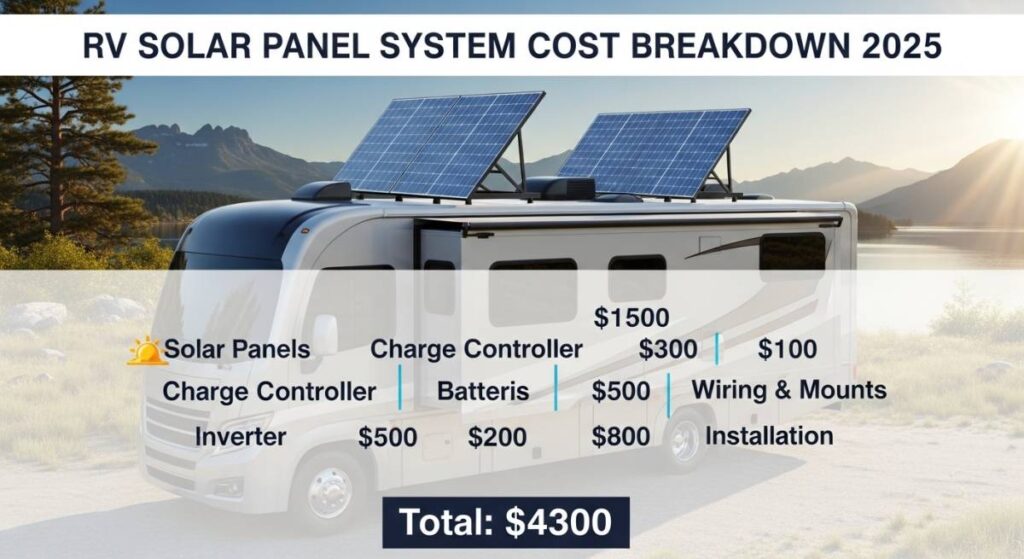
| Component | Budget ($500-$1,000) | Mid-Range ($1,000-$3,000) | Premium ($3,000+) |
|---|---|---|---|
| Solar Panels | 200W monocrystalline ($200) | 400W monocrystalline ($500) | 800W high-efficiency ($1,200) |
| Batteries | 200Ah flooded lead-acid ($300) | 200Ah AGM ($600) | 400Ah lithium ($2,400) |
| Charge Controller | 30A PWM ($50) | 30A MPPT ($200) | 50A MPPT ($400) |
| Inverter | 1000W modified sine ($100) | 2000W pure sine ($600) | 3000W inverter-charger ($1,200) |
| Mounting & Wiring | Basic kit ($100) | Quality mounts & wire ($250) | Premium tiltable mounts ($400) |
| Installation | DIY ($0) | DIY ($0) | Professional ($800) |
| Total | $750 | $2,150 | $6,400 |
Budget systems work well for occasional users who primarily stay in campgrounds but want backup power for short boondocking trips. These systems provide basic lighting, phone charging, and small appliance operation.
Mid-range systems suit regular boondockers and extended travelers who spend significant time off-grid. These setups power refrigerators, laptops, TVs, and most standard RV amenities comfortably.
Premium systems cater to full-time RVers living off-grid indefinitely. With substantial battery capacity and solar generation, these installations power everything including air conditioning (with additional panels), microwaves, and all creature comforts.
Hidden Costs to Consider
Beyond the main components, several additional expenses can affect your total RV solar panel cost. Roof sealant and proper mounting to prevent leaks costs $30-$100. Quality marine-grade wiring prevents corrosion and ensures safety, adding $50-$150. Battery monitoring systems help track performance and health, running $100-$300 for Bluetooth-enabled options.
Fuses, breakers, and disconnect switches are essential safety components costing $50-$150. If your RV roof requires reinforcement for heavier battery banks, this can add several hundred dollars. Extended warranties on premium components add 10-20% to component costs but provide valuable protection for expensive lithium batteries and inverters.
Plan for 10-15% above your calculated costs to cover these extras and any unexpected expenses during installation.
Long-Term Cost Savings
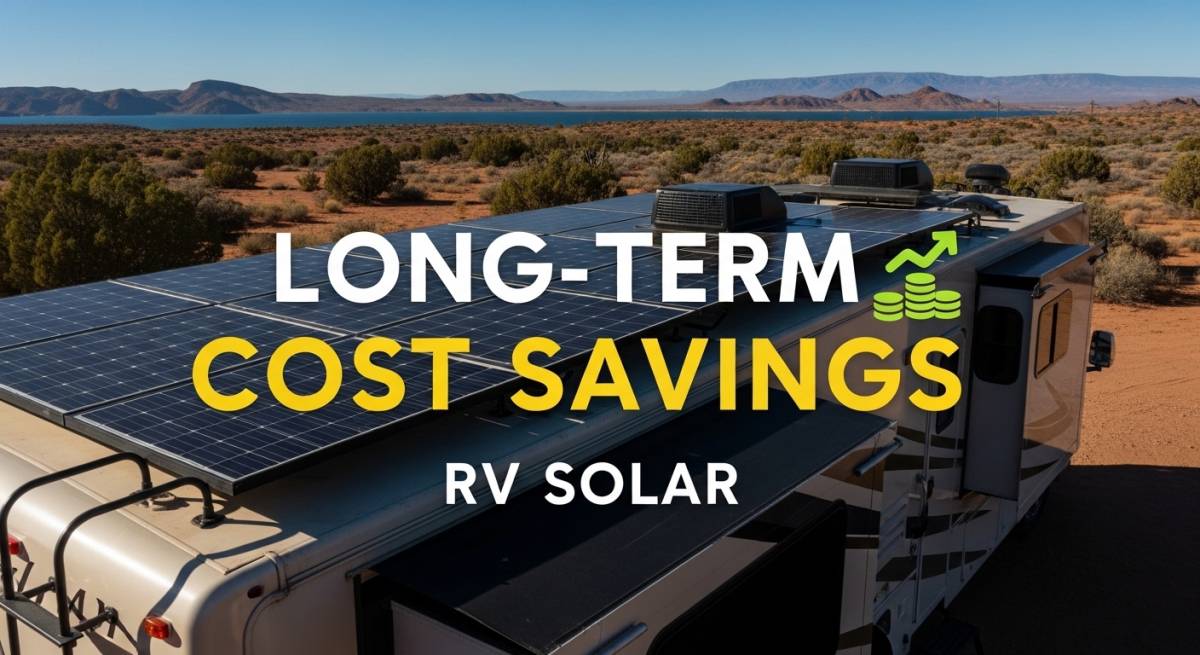
While the upfront RV solar panel cost might seem steep, solar systems deliver substantial long-term savings. Campground fees with electrical hookups average $40-$60 nightly. Just 20 nights yearly without hookups saves $800-$1,200 annually, allowing a mid-range system to pay for itself within 2-3 years.
Generator fuel costs add up quickly at $10-$20 daily for several hours of operation. Solar eliminates this recurring expense entirely. Generator maintenance, repairs, and eventual replacement cost hundreds to thousands over time.
Lithium batteries, despite higher initial costs, last 10+ years compared to 3-5 years for lead-acid, reducing long-term replacement expenses significantly. Most quality solar panels carry 25-year warranties and maintain 80%+ efficiency for decades.
The intangible value of quiet, emission-free power, expanded boondocking opportunities, and energy independence proves priceless for many RV enthusiasts.
Also Read:- Best RV Solar Panels for Wyoming: High Altitude Performance Guide 2026
Choosing the Right System for Your Needs
Assess your typical power consumption by listing all devices you’ll run on solar, their wattage, and daily usage hours. This calculation determines your required battery capacity and solar generation needs.
Weekend warriors using lights, water pumps, and charging devices need modest 200-400 watt systems. Week-long boondockers running refrigerators and entertainment systems benefit from 400-600 watt setups. Full-timers requiring comprehensive power should consider 600-1,200+ watt installations.
Consider your RV’s available roof space, as shading from roof accessories reduces panel options. Factor in your technical comfort level for installation and maintenance. Evaluate your budget, including both upfront costs and long-term value.
Many RVers start with expandable systems, installing basic components initially with capacity to add panels and batteries as needs grow and budgets allow.
Frequently Asked Questions
What is the average cost to install solar panels on an RV?
The average cost for a complete RV solar panel installation ranges from $1,500 to $3,500 for a quality mid-range system including panels, batteries, charge controller, inverter, and installation materials. Budget DIY systems start around $750, while premium professional installations can exceed $6,000. Labor adds $500-$2,000 if you hire professionals, though many RV owners successfully complete DIY installations to reduce costs.
How many solar panels do I need for my RV and what will it cost?
Most RVers need 200-600 watts of solar capacity, translating to 2-6 standard 100-watt panels. Power needs determine the exact requirement—basic lighting and phone charging needs 200 watts ($200-$300), while running refrigerators and electronics requires 400-600 watts ($400-$900). Calculate your daily watt-hours by multiplying each device’s wattage by hours used daily, then multiply by 1.3 to account for inefficiencies. This total divided by 5 (average peak sun hours) gives your required solar wattage.
Are expensive lithium batteries worth the cost for RV solar?
Lithium batteries cost 2-3 times more than lead-acid initially but deliver superior long-term value for most RVers. They provide 100% usable capacity versus 50% for lead-acid, last 10+ years versus 3-5 years, weigh 50% less, charge faster, and require no maintenance. For frequent boondockers and full-timers, lithium batteries pay for themselves through longevity and performance. Occasional users with tight budgets may prefer AGM batteries as a middle-ground option.
Can I start with a small solar system and expand later?
Absolutely! Starting with an expandable system is a smart strategy that spreads costs over time. Begin with 200-400 watts of panels and modest battery capacity, ensuring your charge controller and inverter can handle future additions. Use properly sized wiring from the start to avoid replacements. Many RVers successfully add panels, batteries, or upgrade components as needs grow and budgets allow, avoiding the pressure of a large upfront investment.
How much can I save by installing RV solar panels myself?
DIY installation saves $500-$2,000 in professional labor costs, representing 20-40% of total system expenses. However, DIY requires 8-20 hours of work, basic electrical knowledge, appropriate tools, and assumes responsibility for any mistakes. Pre-wired solar kits with detailed instructions make DIY accessible for moderately handy individuals. If you’re uncomfortable working with electrical systems or drilling through your RV roof, professional installation provides peace of mind and warranty protection worth the added expense.
Final Thoughts
Understanding RV solar panel costs helps you make informed decisions about your energy independence journey. Whether you choose a budget-friendly starter system or invest in premium components for full-time living, solar power expands your camping possibilities and reduces long-term expenses.
The initial investment may seem significant, but the freedom to camp anywhere, the elimination of generator noise, and the satisfaction of clean, renewable power make RV solar systems one of the most valuable upgrades you can make. Start by assessing your power needs, set a realistic budget, and remember that expandable systems allow you to grow your solar capacity over time.